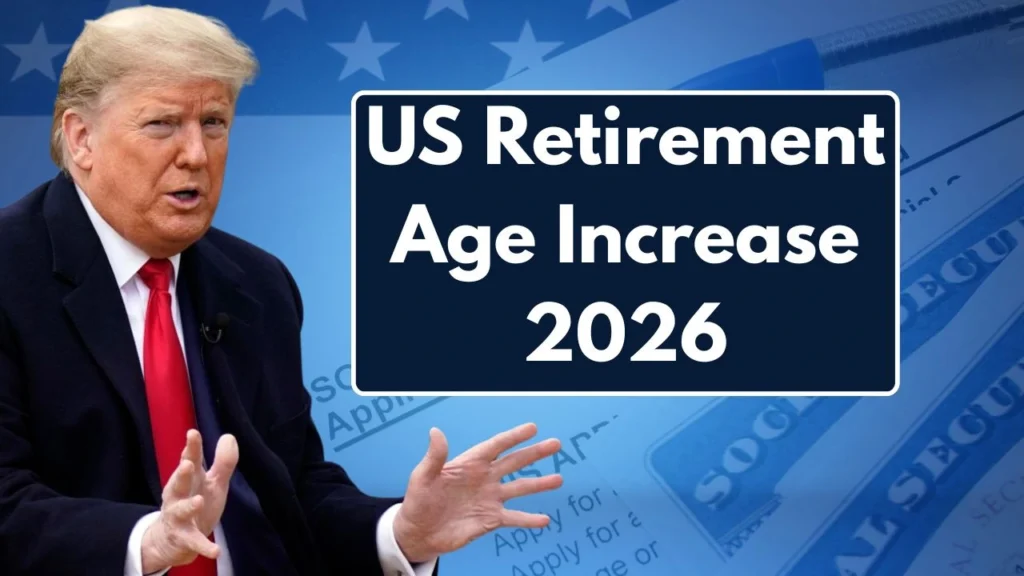
The age of 67 has long been associated with the American retirement dream, since it is the point at which one can finally receive full Social Security payments and reap the rewards of a lifetime of labor. The U.S. government is expected to incrementally push up the full retirement age from 67 to 68 for younger workers who were born after 1964, starting in 2025. That is why everyone is saying Goodbye To Retirement At 67 In US because now there is new age to collect SSA Benefits. It is one of the largest and most controversial changes to Social Security in decades. It would alter how millions of younger Americans plan for the future, but it does nothing to current retirees.

Goodbye To Retirement At 67 In US
With long-term planning being reshaped by financial realities, more and more Americans view retiring at age 67 as unrealistic. Employees are increasingly being forced to work longer into retirement for various reasons including increased health-care costs, high inflation rates, living longer and not having enough money saved. This trend is making retirement at 67 an unaffordable option for many, causing a slow transition to retirement rather than being based on age. People are saying Goodbye To Retirement At 67 In US because the Government has planned to increase the Retirement Age. It will also impact the monthly benefits you get after retirement.
Uncertainty has also been increased by worries regarding the future of Social Security Administration payouts. Even while younger workers’ full retirement age is currently fixed at 67, continuing legislative debates and financial difficulties imply that future retirees would need to work past that age. For many Americans, this means working longer hours, working part-time, and delaying retirement.
New Retirement Age In US To Collect SSA Benefits
| About | New Retirement Age In US To Collect SSA Benefits |
| Country | USA |
| Department | SSA |
| Year | 2026 |
| Month | January |
| New Age Set For Retirement | 67 |
| Who Will Get Benefits? | SSI and SSDI beneficiaries |
| Mode Of Payments | Direct Bank Transfer |
| Category | US Finance |
| Duration | Monthly |
| Official Website | www.ssa.gov |
Is The US Retirement Age Actually Going Up?
There are number of resources disclose retirement age has so far not been increased beyond 67. But discussions in Washington suggest things could change at some point. With fewer workers funding more and more retirees, there are long-term issues of solvency for Social Security. Various replacement options have been proposed including changing payroll taxes, benefit formulas, or increasing the retirement age gradually for younger participants.
Retirement habits are changing even in the absence of statutory reforms. According to labor data, Americans 65 and older are continuing to work for longer periods of time than in the past. To fill the period between employment and complete retirement, many take on less physically demanding jobs, consult, or work part-time.
The Impact of the Retirement Age Change on Monthly Payments
Here’s how the changes to retirement age affect benefits under Social Security:
- Full Retirement Age Benefits: People who retire at the new full retirement age will get 100 percent of their Social Security benefits.
- Early Retirement: Your benefits claimed at 62 will be reduced forever, with the reduction greater as full retirement age goes up.
- Delayed Retirement Credits: If retirees wait beyond the new full retirement age to claim benefits, they can collect extra monthly payments.
New Retirement Age Set By SSA To Collect Social Security Benefits
| Years | New Retirement Age Set By SSA To Collect Social Security Benefits |
| 1954 | 66 yrs |
| 1955 | 66yrs 2 month |
| 1956 | 66yrs 4month |
| 1957 | 66yrs 6 month |
| 1958 | 66yrs 8 month |
| 1959 | 66yrs 10 month |
| 1960 | 68 to 70 yrs |
Fact Check
For people born in 1960 or later, the Social Security Administration’s full retirement age to get 100 percent of your Social Security payments is still 67 under U.S. law as it stands now. Benefits can be deferred as late as 70 to receive a larger amount each month in the form of delayed retirement credits or claimed as early as 62 with permanently reduced benefits. While Congress continues to discuss future changes that would address long-term budget issues, there is no enacted adjustment that would raise the official full retirement age beyond 67 at this time.
FAQs On Goodbye To Retirement At 67 In US
Is US really raising retirement age above 67?
No, the current law is still that full retirement age is 67.
Can you still retire at 62 as an American?
Yes, but the advantages are severed for good.
What happens if you file for benefits when you are 62?
Monthly instalments have been cut by 25–30%.
Is 70 the new retirement age?
No, but the advantages increase if you delay until 70.
Why do you work at 67?
You need to work longer because the cost of living and health care is increasing.
Is there an age when SSA makes you retire?
Retirement is a personal decision.
Why does 67 seem less doable now?
Savings are being strangled by higher costs and longer life spans.